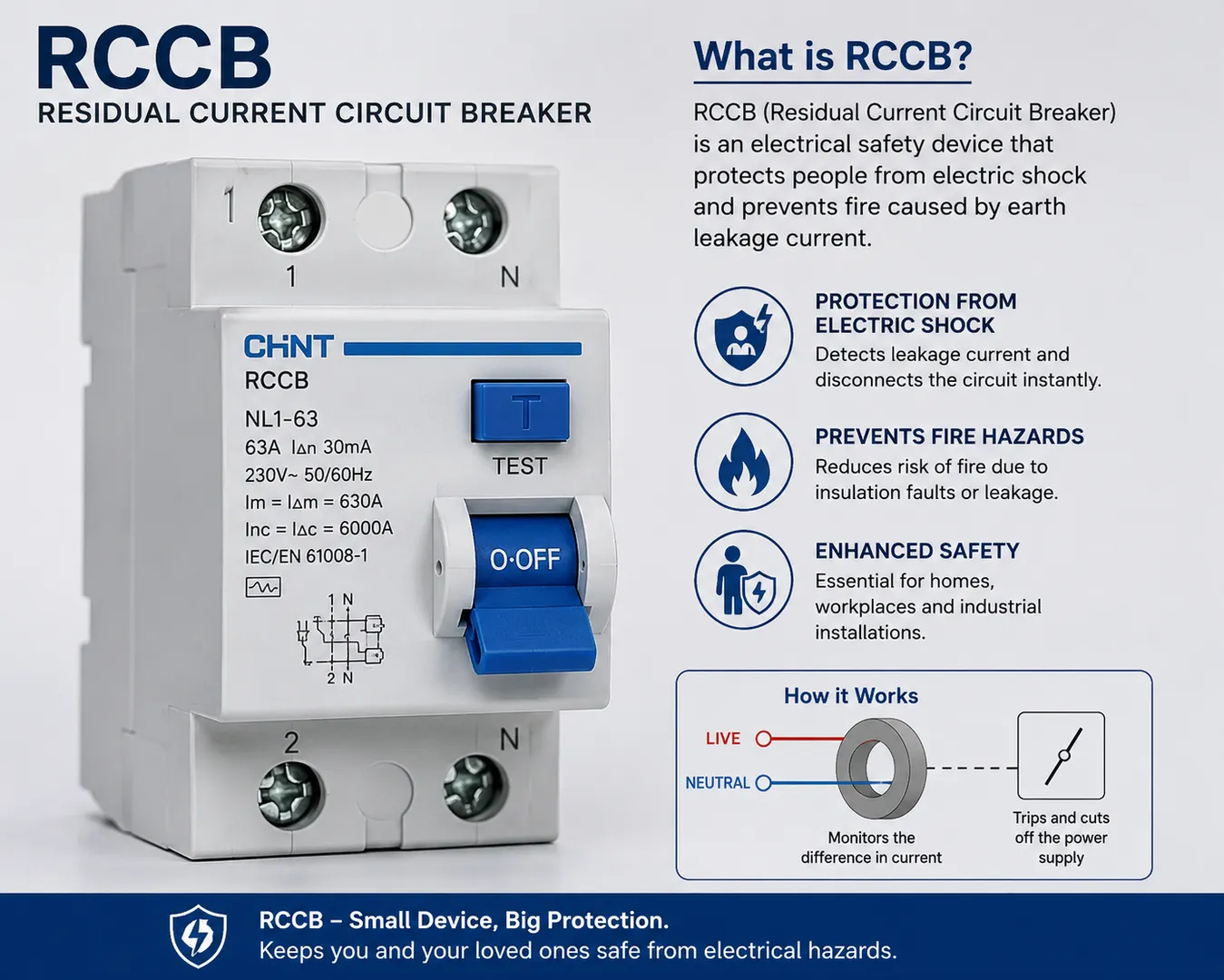
Electrical safety is a top priority in every industrial environment. While overload and short-circuit protection are essential, they do not always protect people from electric shock caused by leakage currents. This is where Residual Current Circuit Breakers (RCCBs) become indispensable. An RCCB detects current leakage and disconnects the power supply before it can cause serious injury or damage.
For industries across Maharashtra, selecting the right RCCB supplier is as important as choosing the correct protection device. A knowledgeable supplier helps businesses procure genuine products that match application requirements, ensuring safer electrical systems and greater operational reliability.
Understanding the Role of an RCCB
An RCCB continuously monitors the current flowing through the live and neutral conductors. Under normal operating conditions, the incoming and outgoing currents remain balanced. If an electrical leakage occurs because of insulation failure, damaged wiring, or accidental human contact, the RCCB immediately disconnects the circuit.
This rapid response helps:
- Protect people from electric shock
- Reduce the risk of electrical fires
- Prevent equipment damage caused by leakage currents
- Improve workplace safety
- Support compliance with electrical safety standards
Unlike MCBs or MCCBs, RCCBs are specifically designed to detect earth leakage faults rather than overload conditions.
Where RCCBs Are Used
Although RCCBs are widely used in commercial and residential buildings, they are equally important in industrial installations where electrical safety is critical.
Typical applications include:
- Industrial distribution boards
- Manufacturing plants
- Machine control panels
- Commercial facilities
- Warehouses
- Healthcare institutions
- Educational campuses
- Office buildings
- Water treatment plants
- Food processing industries
Proper RCCB selection depends on the electrical system, load characteristics, and protection requirements.
Why Supplier Selection Matters
An RCCB performs a life-saving function. Using poor-quality or counterfeit products increases safety risks and may compromise the entire electrical installation.
A reliable supplier offers far more than product availability.
Genuine Products
Authentic RCCBs are manufactured according to strict quality standards and undergo extensive testing before reaching the market. Genuine products provide dependable protection throughout their service life.
Technical Product Guidance
Different installations require different RCCB specifications.
A knowledgeable supplier can help customers choose products based on:
- Rated current
- Residual operating current
- Number of poles
- Voltage rating
- Type of electrical installation
- Environmental conditions
Correct product selection reduces installation issues and improves overall system performance.
Consistent Product Availability
Industrial maintenance teams often require replacement devices without delay. Suppliers maintaining adequate inventory help minimize downtime during planned maintenance and emergency repairs.
Reliable Documentation
Product datasheets, certifications, operating instructions, and warranty support simplify procurement, inspections, and regulatory compliance.
Common Mistakes When Purchasing RCCBs
Electrical safety can be compromised when procurement decisions focus only on price.
Some common mistakes include:
- Purchasing uncertified products
- Selecting incorrect current ratings
- Ignoring leakage sensitivity requirements
- Choosing incompatible replacement devices
- Buying from suppliers with limited technical knowledge
- Overlooking manufacturer support
Working with an experienced supplier helps avoid these issues and ensures the protection system functions as intended.
Questions to Ask Before Choosing an RCCB Supplier
Before finalizing a supplier, procurement teams should evaluate their capabilities carefully.
Important questions include:
- Are the RCCBs supplied through authorized manufacturers?
- Can technical recommendations be provided for different applications?
- Are multiple ratings available in stock?
- Can urgent industrial requirements be fulfilled quickly?
- Is technical documentation readily available?
- Does the supplier regularly support industrial and commercial projects?
These questions help identify suppliers capable of supporting long-term operational requirements.
Benefits of Building a Long-Term Supplier Relationship
Industrial facilities require periodic maintenance, system expansion, and equipment upgrades. Partnering with a dependable RCCB supplier offers several long-term advantages.
These include:
- Consistent access to quality products
- Faster procurement during emergencies
- Better technical consultation
- Reduced procurement delays
- Improved maintenance planning
- Reliable after-sales assistance
Such support contributes to safer and more efficient electrical operations.
Supporting Industrial Safety Across Maharashtra
Industrial growth throughout Maharashtra has increased the demand for dependable electrical protection solutions. Manufacturing units, commercial projects, infrastructure developments, and automation facilities all require reliable RCCBs to protect personnel and equipment from electrical hazards.
Businesses that understand regional industrial requirements are better equipped to provide prompt deliveries, technical guidance, and dependable product availability across major industrial centres in the state.
Companies such as Deeva Electricals and Automation supply RCCBs along with a comprehensive portfolio of industrial electrical and automation products for electrical contractors, panel builders, OEM manufacturers, EPC companies, and industrial maintenance teams across Maharashtra. Buyers evaluating suitable protection devices can also refer to deevaelectricals.com to understand available product options and technical specifications.
Choosing the right RCCB supplier is ultimately an investment in workplace safety and electrical system reliability. By prioritizing genuine products, technical expertise, and dependable service, industries can create safer electrical installations while reducing operational risks for years to come.
Keywords