Industrial power supplies support PLCs, sensors, relays, controllers, communication equipment and other devices used throughout automation systems. When a power supply is incorrectly specified, the impact may extend beyond one component because several control devices can depend on the same source.
Selecting an Industrial Power Supply Distributor should therefore involve technical evaluation, product availability and an understanding of automation requirements.
Check Input and Output Requirements First
The basic electrical specifications need to match the application.
Buyers should establish:
- Input voltage range
- Required output voltage
- Output current
- Total connected load
- Power requirement
- Number of loads
- Installation environment
- Mounting arrangement
A safety margin may also be considered according to the equipment manufacturer's recommendations and system design.
Consider the Nature of the Connected Equipment
Not every control load behaves identically.
PLCs, sensors, relays and other automation devices may have different current requirements. Some loads can also create temporary current demands during startup.
The complete load profile should therefore be considered rather than simply adding a power supply to the bill of materials based on a rough wattage estimate.
Review Panel Environment and Installation Space
Industrial control panels may operate in demanding conditions. Temperature, ventilation, enclosure design and available DIN-rail space can influence product selection.
Compactness can be valuable, but it should not come at the expense of required electrical performance.
For factories and automation projects across Maharashtra, environmental considerations may be particularly relevant in continuous production areas, machinery panels and installations exposed to elevated ambient temperatures.
Assess Supply Continuity
Automation components are often required both during initial panel building and later for maintenance.
A distributor capable of supporting repeat procurement can make standardization easier for OEMs and industrial maintenance departments. Consistent product specifications can also simplify spares planning.
Ask whether the supplier can support:
- Required voltage and power ranges
- Industrial-grade configurations
- Product documentation
- Repeat requirements
- Related control-panel components
- Bulk project procurement
Evaluate the Wider Automation Requirement
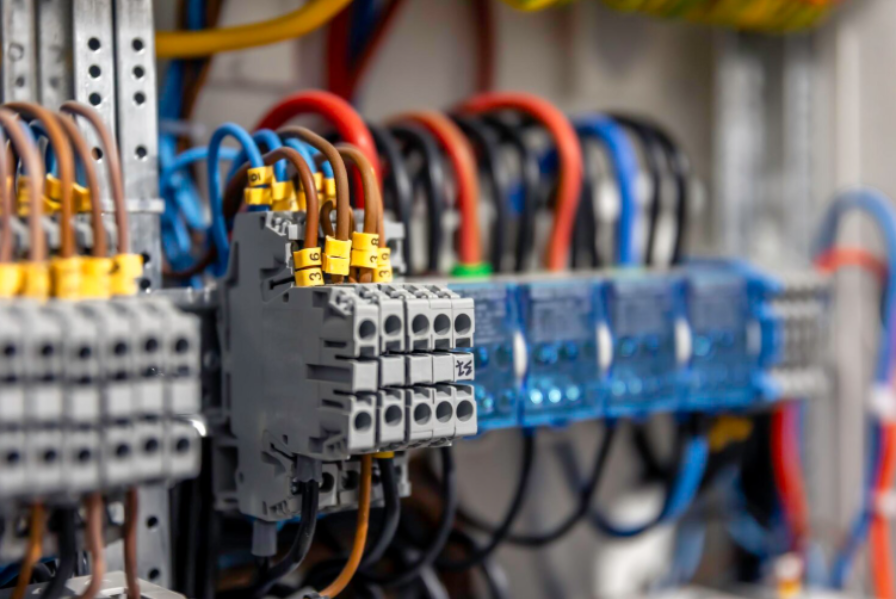
Power supplies rarely operate alone. An automation panel may contain contactors, breakers, relays, terminal accessories, protection components and measurement devices.
Deeva Electricals and Automation supplies industrial power supplies alongside switchgear and automation-related electrical products for customers in Maharashtra. This can be useful for panel builders, machine manufacturers and procurement teams managing multi-component requirements.
Choosing a distributor should ultimately be based on whether the required power supply fits the control system and whether future procurement can be managed consistently.
For an upcoming automation panel, prepare the load calculation, required output voltage, installation conditions and quantity before requesting options. That information enables a more technically relevant discussion and reduces the likelihood of purchasing a unit that looks suitable on paper but does not match the actual application.
Keywords